
Arrest Warrants in Baraga County
A Baraga County arrest warrant is an order from a judge. It tells a peace officer to arrest a person and bring them before a magistrate without unnecessary delay. Two features set it apart from a bench warrant. It rests on a sworn complaint plus a finding of reasonable cause, and it opens a new case rather than pushing along an old one. Michigan sets the standard as reasonable cause built on factual allegations, sworn testimony, or an affidavit.
How a Baraga County Arrest Warrant Gets Issued
Each step in Baraga County leaves a paper trail. The order matters, because it tells you which office holds the answer. Nobody at a counter can simply decide the case for you.
Warrant flow: sworn complaint or affidavit › prosecutor or authorized attorney review › judge or magistrate finds reasonable cause › warrant issues with a proper return required › peace officer serves it › arraignment follows without unnecessary delay.
Two statutes govern a Baraga County arrest warrant. The issuance statute sets the complaint and cause standard, while the execution statute covers the warrant's commands and the officer's return.
Why a Summons Is Usually Preferred Here
Michigan's own warrant checklist tells courts in Baraga County and everywhere else to pick a summons over a warrant unless an exception applies. The exceptions are narrow. An assaultive or domestic violence allegation counts, as does a reason to think the person will skip court, a public safety risk, or a prosecutor's request. That preference matters when you read a docket. A charge can be filed and a date set with no warrant ever issued. The electronic checklist lays out the factors a court weighs.
What a Baraga County Arrest Warrant Contains
The statute spells out what a Baraga County warrant must contain. It states the substance of the accusation. It names the officer directed to execute it, commands an immediate arrest, and requires a return showing what happened.
| Accusation | The substance of the charge, stated in the process |
|---|---|
| Directed officer | The peace officer commanded to execute the warrant |
| Command | Arrest the person and bring them before a magistrate |
| Return | The officer's record of execution or disposition |
| Case link | The court file and case number where the charge is pending |
A Baraga County public docket shows case information, not the warrant form itself. Expect these fields as docket entries rather than a separate document.
How Baraga County Arrest Warrants Are Served
The warrant is directed to a peace officer, and more than one agency in Baraga County can serve it. The county sheriff delivers court orders and civil process countywide. A village police department can serve a matter inside its own jurisdiction, the Michigan State Police work state-level cases, and tribal police handle matters under tribal jurisdiction. Because service can happen at a traffic stop, a booking, or a scheduled contact, a person often learns of the warrant after custody rather than before. The rule after arrest is arraignment without unnecessary delay. Bond and release conditions come from the court, not from the arresting agency.
Who to Call About a Baraga County Warrant
Each agency answers a different question, and the wrong call costs a day.
For a Baraga County warrant, each office answers a different question. The clerk confirms the case and the court. The sheriff handles custody and service routing. The prosecuting attorney makes charging decisions, and the county clerk keeps circuit court files once a felony is bound over.
Arrest Warrant vs Summons vs Bench Warrant
Three instruments, three purposes in Baraga County. Reading them side by side is the quickest way to decode a case record.
| Feature | Arrest Warrant | Summons | Bench Warrant |
|---|---|---|---|
| Basis | Sworn complaint and reasonable cause | A filed charge | A missed obligation |
| Custody | Immediate arrest authorized | None at issuance | Arrest authorized |
| Issued by | Judge or authorized magistrate | The court | The judge on the case |
| Effect | Starts a case | Sets an appearance | Advances an open case |
District Case or Bound Over Felony
A felony in Baraga County begins in district court and moves to circuit court on bindover. The arrest warrant belongs to the stage where the case sat when it was issued. The current file controls the next appearance.
- Find the court and case number on any paperwork you have.
- Search the case in the public docket to see the filing date and the charge level.
- Ask which case number controls the next appearance if there are two.
- Confirm bond conditions and counsel questions with the clerk of that court.
Why You Cannot Look This Up in a Police System
Michigan's law enforcement network is closed to the public. Only qualified criminal justice agencies get in. No public login, counter lookup, or phone line in Baraga County will read a warrant status to a stranger.
What works instead: the court file. A case search plus a call to the clerk answers the question that the restricted system would answer for an officer.
The state criminal history service is no substitute either in Baraga County. It excludes warrant information by its own description.
What to Do If There Is a Warrant for You
Work through the court, with a lawyer, instead of waiting to be found. These steps are ordered, and each one in Baraga County can be done before an appearance.
- Confirm the court, the case number, and the charge with the clerk.
- Hire or consult an attorney about voluntary appearance and recall.
- Ask the court what documents and security rules apply, and arrive on time.
- Address bond conditions and any underlying obligation the court identifies.
- Confirm the outcome on the docket and keep the next hearing date.
Important: any peace officer who encounters an open warrant may arrest on it. Talking to a lawyer first usually produces a better plan than turning up without advice.
When the Case Is Federal
Baraga County sits in the Western District of Michigan. The nearest listed federal regional location is Marquette, not a local courthouse. Federal process runs through federal agencies, and a federal warrant can stay sealed until it is executed.
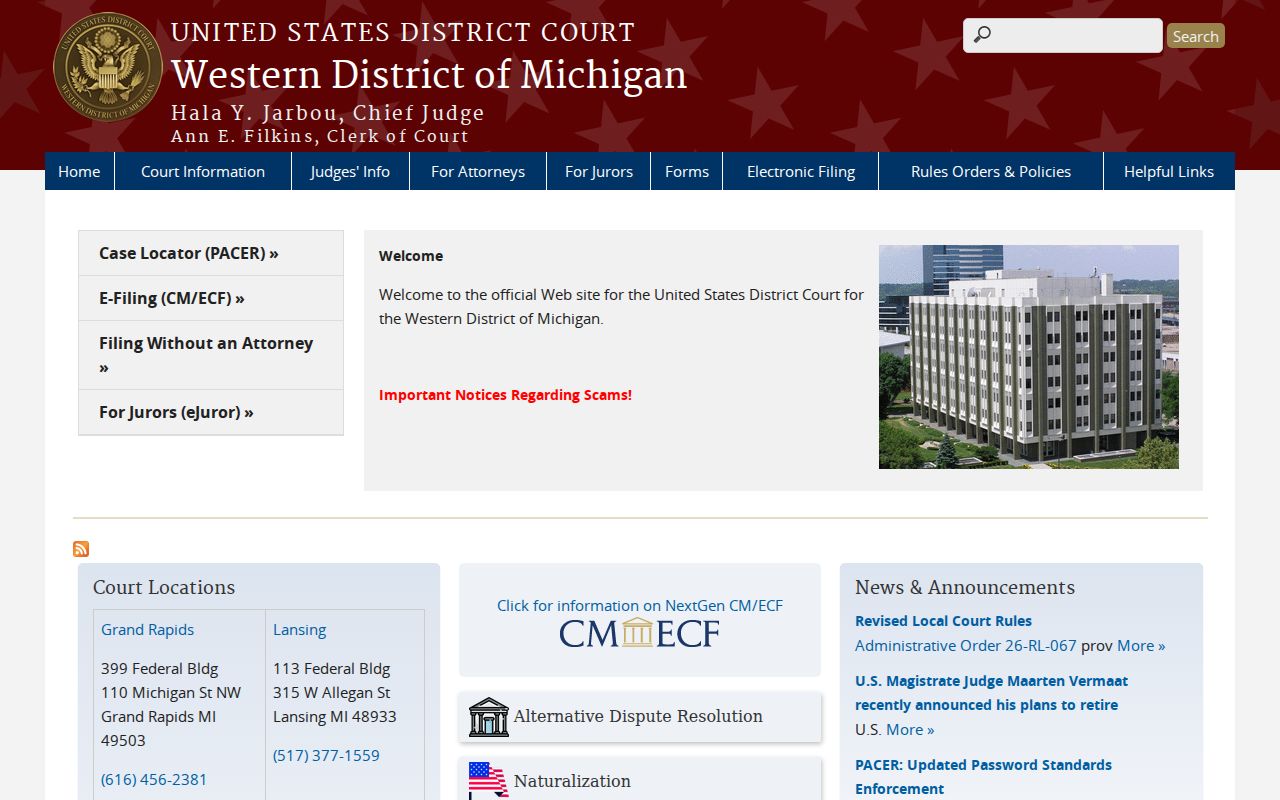
The federal district court site lists district locations and explains how to reach the clerk.
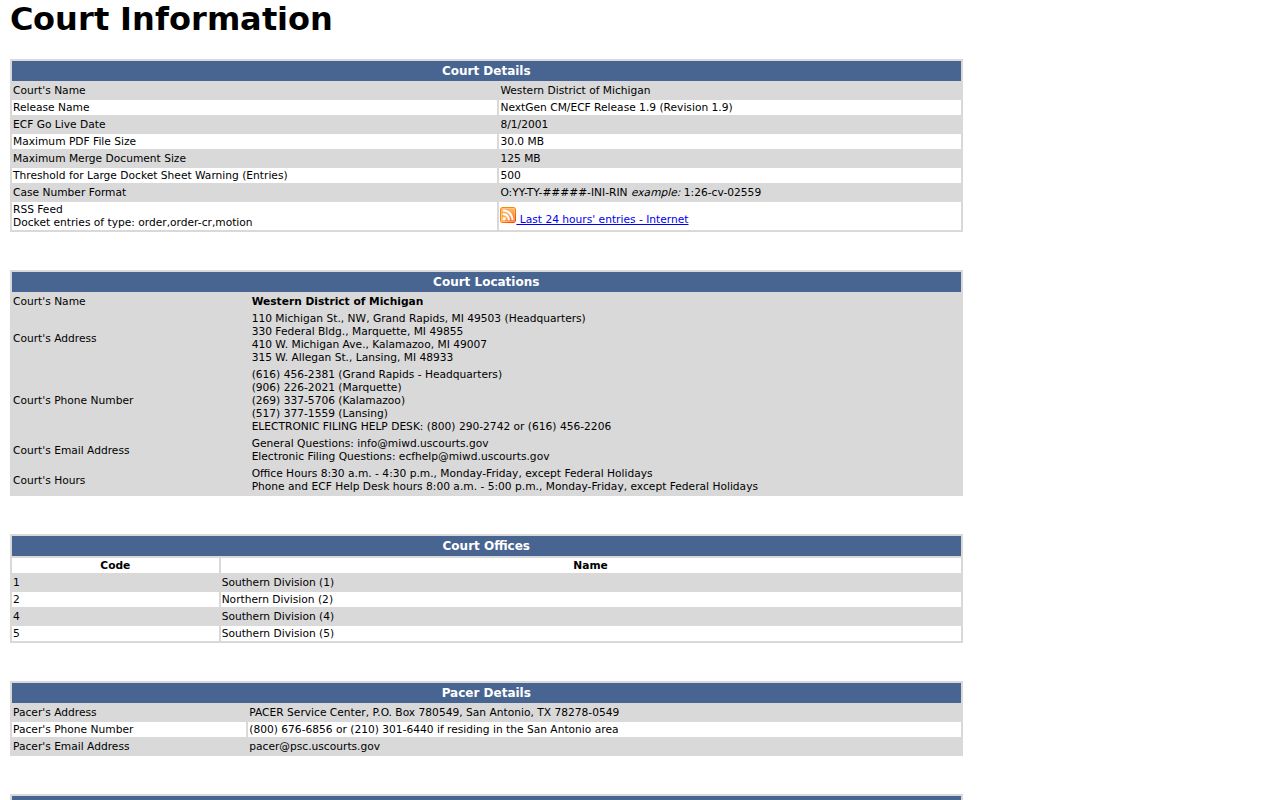
The court information page posts hours, contacts, and the federal case number format used on dockets.
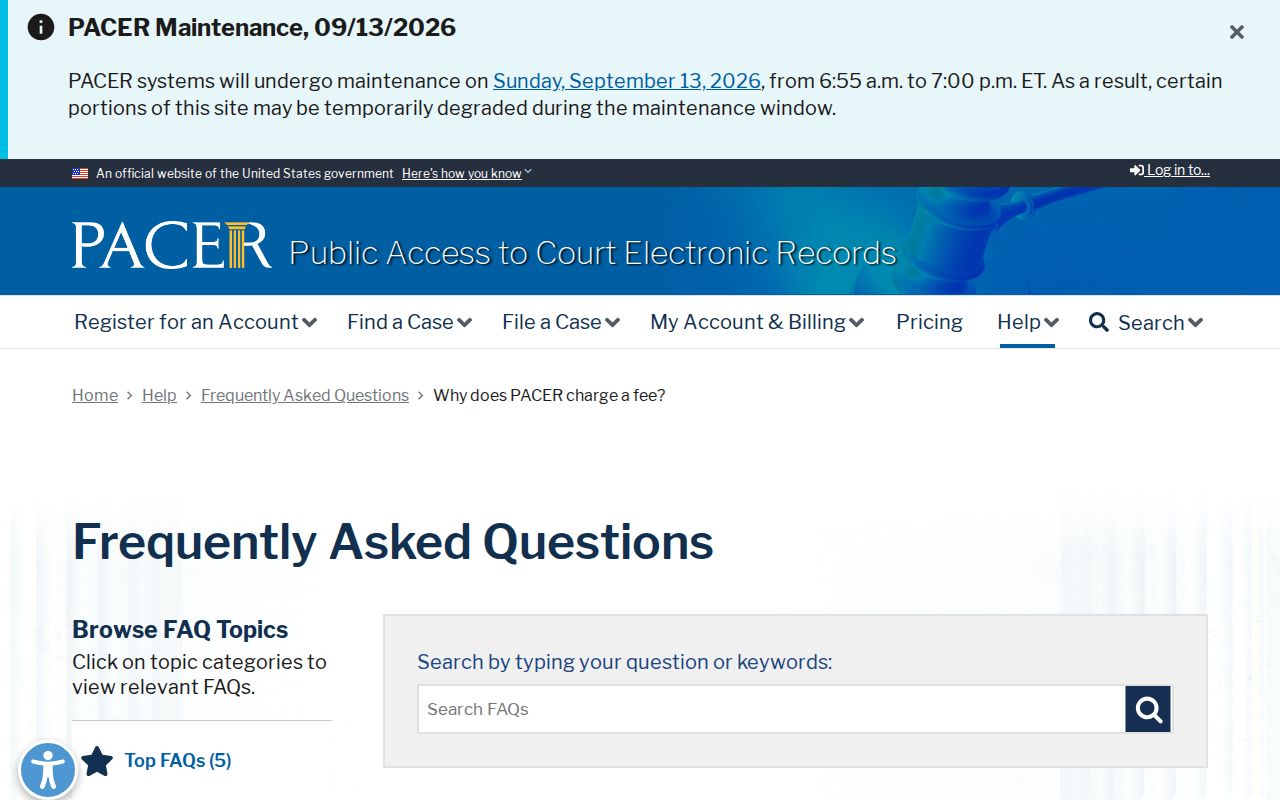
Federal docket access is not free at scale. The fee page covers the per-page rate, the document cap, and when fees are waived.